

The Jaguar brand redesign and update is a bold step.

JaGuar’s Bold Rebrand: A Strategic Leap into the Future

Jaguar redesigned logo and brand update is a necessary and bold step.

In the world of luxury automotive branding, few moves have been as audacious as JaGuar’s recent rebranding initiative. As someone who has spent over three decades in the branding industry, I find myself intrigued by the boldness of this strategic pivot that has set the automotive world abuzz.

The luxury carmaker’s decision to completely reimagine its brand identity – from its iconic leaping jaguar to its very name styling (now “JaGuar”) – represents more than just a visual overhaul. It’s a calculated gambit to reposition the brand for an electrified future, even if it means challenging nearly a century of heritage.
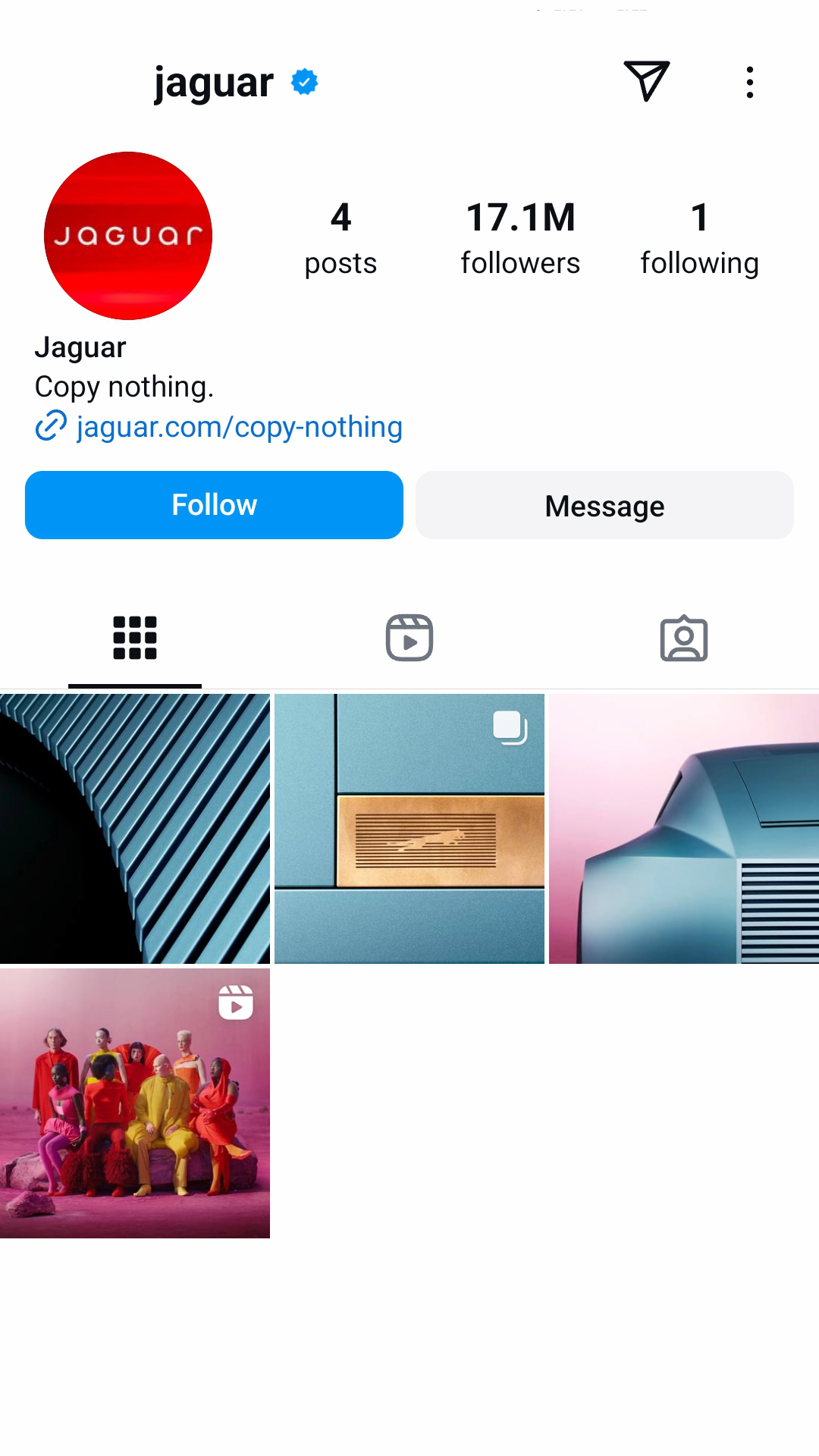
Jaguar's willingness to start with a clean slate, is exemplified by the deletion of their entire social media history.

What’s particularly fascinating is the brand’s willingness to start with a clean slate, exemplified by the deletion of their entire social media history. This move, while shocking to many, signals an unwavering commitment to their new direction.

Drawing parallels to other rebranding “failures” misses a crucial point: each brand’s journey is unique. The success or failure of previous rebranding efforts by other companies cannot predict JaGuar’s fate. What matters is the strategic thinking behind the move and the consistency of its execution moving forward. The brand’s design chief, Gerry McGovern, acknowledged that the new direction would “shock, surprise and polarize.” This wasn’t an oversight – it was the intent. In today’s cluttered marketplace, generating conversation is half the battle. The 500% increase in online searches for the brand suggests they’ve already achieved this initial objective.

With captions such as "delete ordinary" and "copy nothing", Jaguar's new campaign has electrified audiences worldwide.

The promotional campaign, with its vibrant aesthetics and abstract narrative, has predictably divided opinion.

What critics might be overlooking is that JaGuar’s target audience isn’t necessarily their current customer base. The luxury automotive landscape is shifting rapidly, with electric vehicles and changing consumer preferences reshaping the market. JaGuar appears to be positioning itself for this future, even if it means potentially alienating some traditional customers in the short term.

As we approach the December 2024 concept car reveal in Miami, it’s crucial to remember that this rebranding is just the first step in what will likely be a longer transformation journey.

From my perspective, JaGuar’s brand managers deserve the space and time to execute their vision. While the risks are significant, so too are the potential rewards. In an industry where playing it safe often leads to irrelevance, JaGuar’s willingness to take such a decisive step might just prove to be their masterstroke.
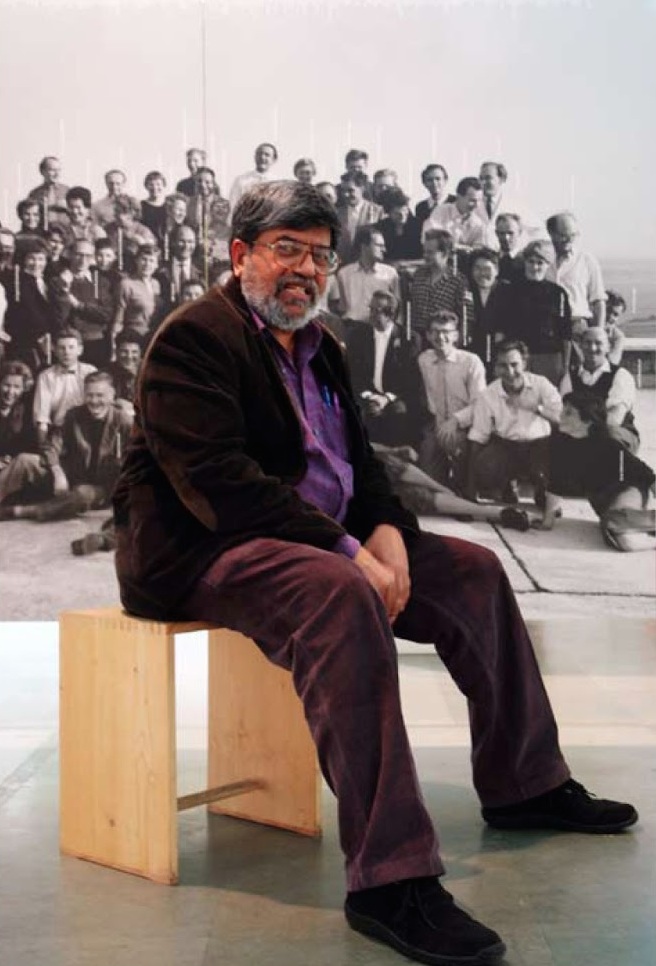
Prof. M. P. Ranjan Passes Away

M.P. Ranjan
Prof. M.P. Ranjan passes away.

Prof. M. P. Ranjan, a senior faculty member of National Institute of Design (NID), Ahmedabad, and a highly respected design thinker, passed away on the 9th of August, 2015. His passing away is a huge loss for the design community, including students.

He was the author of the blog http://design-for-india.blogspot.in. Below bio has been taken from this website:

As a member of the faculty since 1976 he has been responsible for the creation and conduct of numerous courses dealing with Design Theory and Methodology, Product and Furniture Design and numerous domains of Digital Design. He has conducted research in many areas of Design Pedagogy, Industrial and Craft Design and on the role of design policy in various sectors of the Indian economy. He has held many administrative positions at NID and is currently Head, NID Centre for Bamboo Initiatives at NID. Besides publishing several papers on design and craft he has edited numerous volumes of NID publications including the “Young Designers” series and is author of a major book titled “Bamboo and Cane Crafts of Northeast India” (1986) and two CD-ROMs titled “Bamboo Boards and Beyond” (2001) and “Beyond Grassroots” (2003) which contain all his papers and reports on bamboo and on design. He helped build the Indian Institute of Crafts and Design at Jaipur and the Bamboo & Cane Development Institute, Agartala. He is co-editor of a major publication “Handmade in India” (2008) which documents the crafts of India and is produced by the Development Commissioner of Handicrafts, Government of India.

As a professional designer he has handled many design projects for industry, government and international agencies in areas of product design, interior design, exhibition design, craft design and design policy. As Chairman of NID’s consulting Design Office from 1981 to 1991 he was responsible for managing over four hundred professional design projects handled by the Institute in that period. He has headed the NID’s Publications and Resource Centre as well as the Information Technology initiatives as Chairman Computer Centre and Head Apple Academy at NID. He completed several major projects for the UNDP and Government agencies to demonstrate the role of bamboo as a sustainable craft and industrial material of the future. These innovations contributed to the creation of new strategies for the use of bamboo in India.

M P Ranjan was born in Madras in 1950 and after his schooling and junior college there he joined NID as a design student in 1969 in the PG programme in Furniture Design. He joined the Faculty at NID in 1972 and for a short while, between 1974 and 1976, worked as a professional designer in Madras before returning to NID as a full time faculty member in 1976. He now teaches full time at the National Institute of Design, Ahmedabad. He is on the Governing Council of the IICD, Jaipur and is the Chairman, Geovisualisation Task Group set up by the Department of Science and Technology, Government of India.

His website set up in late 2004 is a growing resource of writings and visual presentations on his numerous areas of interest, projects and teaching programmes.