
Cause for Celebration

The announcement of National Handloom Day calls for celebration. Any initiative which brings attention to things handwoven, is to be welcomed. Handwoven textiles feel much nicer and possess a certain kind of indescribable beauty. They are a luxury in that a skilled artisan’s attention was focused solely on making it. They are the result of incredible synchronisation of hand and mind. Think of a handloom sari as wearable high art. And then there are macro reasons to celebrate handlooms.

That weaving as a craft has been practiced in India for 5000 years. That historically Indian handwoven textiles were considered to be the finest in the world. That they were in high demand and often sold in exchange with gold, silver and precious gemstones. That 95% of the world’s handwoven fabric comes from India. That it is one of the most sustainable forms of self-employment.

Therefore, the launch of the first National Handloom Day on 7th August, 2015, by prime minister Shri Narendra Modi is an event of great importance especially for those who care for handmade products. Symbolically, the date has been chosen due to its significance in India’s history; the Swadeshi Movement was launched on this day in 1905.

As you know, Sarangi, the Kanjivaram sari store, deals only in handwoven fabrics and nothing else. Therefore, this announcement brings great joy to us – our artisans and staff. I encourage you to make the time and watch the event webcast at http://webcast.gov.in/mot/handlooms/. We hope that you will share the spirit of India’s handwovens and join the celebrations. Please pass on this message to your friends who may be interested.

Best wishes and thanks,
Prabodh Jain
Director of Design, Founder
Sarangi, the Kanjivaram sari store
http://www.sarangithestore.com
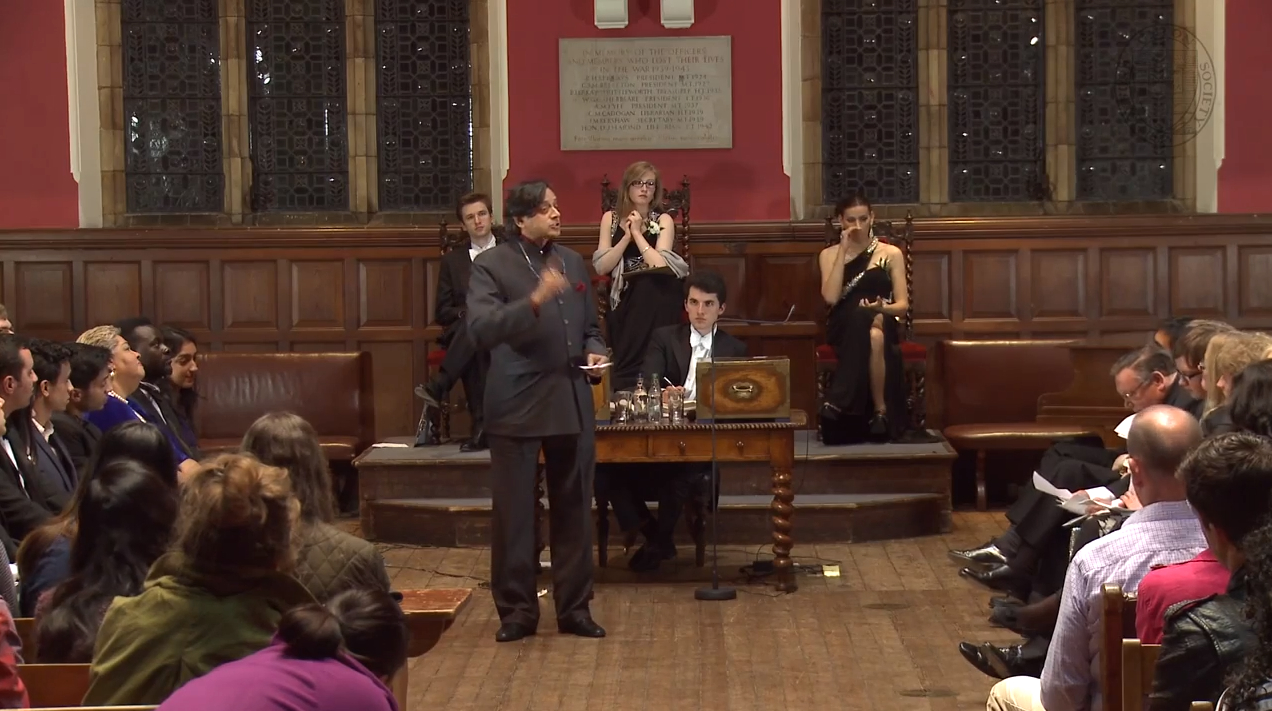
Handlooms and British Colonialism

Shashi Tharoor, currently Lok Sabha MP, speaks about the finest of textiles produced by Indian handloom weavers during the British rule.

Shashi Tharoor Oxford Union Society Speech

Speaking at an Oxford Union Society debate about whether Britain owed reparations to India or not he said: “Britain’s Industrial Revolution was built on the de-industrialisation of India – the destruction of Indian textiles and their replacement by manufacturing in England, using Indian raw material and exporting the finished products back to India and the rest of the world. The handloom weavers of Bengal had produced and exported some of the world’s most desirable fabrics, especially cheap but fine muslins, some light as “woven air”. Britain’s response was to cut off the thumbs of Bengali weavers, break their looms and impose duties and tariffs on Indian cloth, while flooding India and the world with cheaper fabric from the new satanic steam mills of Britain. Weavers became beggars, manufacturing collapsed; the population of Dhaka, which was once the great centre of muslin production, fell by 90%. So instead of a great exporter of finished products, India became an importer of British ones, while its share of world exports fell from 27% to 2%.”

Handloom weaving was an important part of India’s economy and one of the key factors influencing British attitudes to colonial India.

Watch the video here: https://youtu.be/f7CW7S0zxv4. Though the entire speech is worth listening to the portion between 1.34 and 2.30 minutes is specially relevant to those who care about India’s handloom weaving traditions.

Books I Read | The Best of British Packaging

Design books are a source of inspiration as well as learning. I deep dive into them to discover the work of designers in lands far and near. Published in 1990, The Best of British Packaging, edited by Edward Booth Clibborn and designed by Minale Tattersfield, is a fine specimen.

Edited by Edward Booth Clibborn. Designed by Minale Tattersfield

The-Best-of-British-Packaging-2The-Best-of-British-Packaging-4 The-Best-of-British-Packaging-3

Man on the Edge Radio Show

Man-on-the-Edge-Prabodh-Jain-Chennai-Live

Got a call from Srinidhi who is interning with Chennai Live 104.8 FM. It was an enriching experience to be interviewed by RJ Tausif. This was for Man on the Edge, which, as per the producers is a radio show that talks about ordinary men who live extraordinary lives. Tausif is an enthusiastic and affable person and a real pleasure to work with. The recording is shared below:

Alternately, you may like to download the audio file from Dropbox.

If I am not for myself

If I’m not for myself, who can be for me?
And if I’m only for myself, then what am I?
And if not now, when?

This is from the Talmud and is a translation of the original written in Aramaic language.

I have used this to answer the question “What’s your life motto?” asked by Ronald Wopereis on LinkedIn Answers.

Coverage in Marwar magazine

The November December 2008 issue of Marwar magazine has carried a 4 page article based on an interview by Melanie Fernandes. The interview happened in the lounge at the Four Season’s Hotel in Worli, Mumbai. Marwar is a premium, bimonthly glossy magazine featuring people who hail from the region of the same name – broadly the state of Rajasthan in northwestern India.

I have posted this on Issuu, link here:
Get your ownOpen publication
A PDF file is attached here.