
Shashi Tharoor, currently Lok Sabha MP, speaks about the finest of textiles produced by Indian handloom weavers during the British rule.
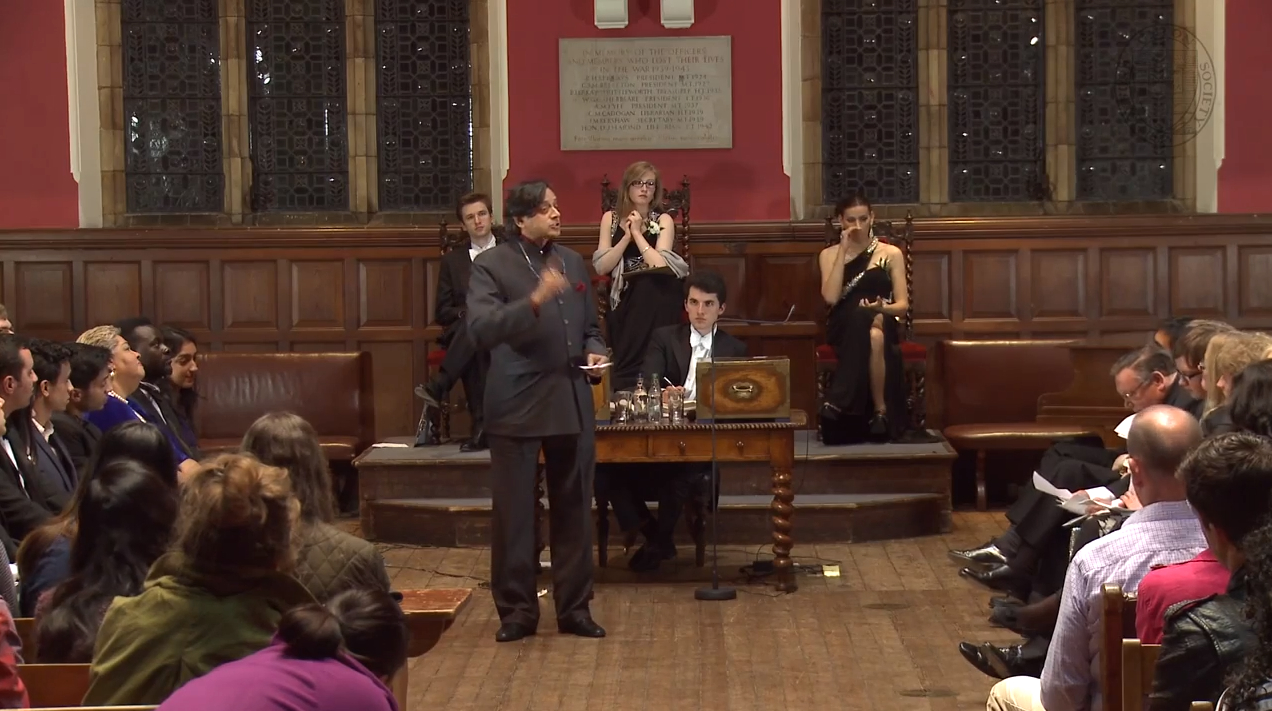
Speaking at an Oxford Union Society debate about whether Britain owed reparations to India or not he said: “Britain’s Industrial Revolution was built on the de-industrialisation of India – the destruction of Indian textiles and their replacement by manufacturing in England, using Indian raw material and exporting the finished products back to India and the rest of the world. The handloom weavers of Bengal had produced and exported some of the world’s most desirable fabrics, especially cheap but fine muslins, some light as “woven air”. Britain’s response was to cut off the thumbs of Bengali weavers, break their looms and impose duties and tariffs on Indian cloth, while flooding India and the world with cheaper fabric from the new satanic steam mills of Britain. Weavers became beggars, manufacturing collapsed; the population of Dhaka, which was once the great centre of muslin production, fell by 90%. So instead of a great exporter of finished products, India became an importer of British ones, while its share of world exports fell from 27% to 2%.”
Handloom weaving was an important part of India’s economy and one of the key factors influencing British attitudes to colonial India.
Watch the video here: https://youtu.be/f7CW7S0zxv4. Though the entire speech is worth listening to the portion between 1.34 and 2.30 minutes is specially relevant to those who care about India’s handloom weaving traditions.
 Prabodh Jain
You must be logged in to post a comment.